
Two North Queensland businesses. Two very different problems. Both walked away with results that genuinely changed their bottom lines. We want to share these stories because they show exactly how proactive energy management works in practice.
This one is a good example of how much money can be sitting quietly in the wrong tariff structure. The client hadn’t done anything wrong. They’d signed a contract, been supplied reliably, and paid their bills. Their retailer wasn’t being dishonest. The tariff just wasn’t the right fit any more.
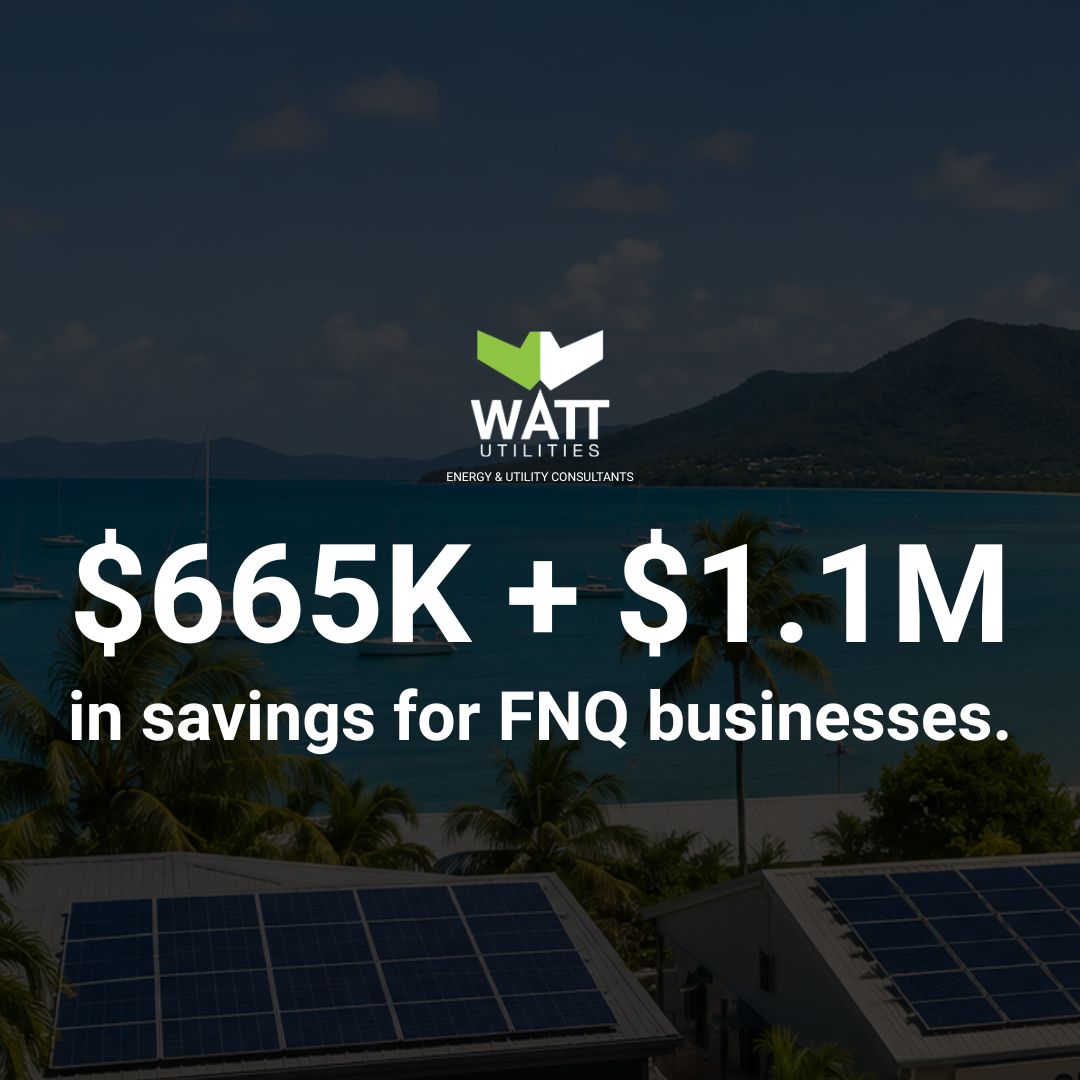
When our team reviewed their account, we found a mismatch between how they were being charged and how they were actually using electricity. The fix didn’t require switching retailers or renegotiating supply. We identified a more suitable tariff, had it applied, and the saving landed at $665,000 a year. Same retailer. Same poles and wires. Just the right tariff.
$665,000 per year saved. No retailer switch. No disruption to supply. Just a tariff that matched how the business actually uses energy.
This is something our team does twice a year for every existing client, without them having to ask. We run a full tariff review after the new rates come into effect on 1 July each year, and again in January or February. The mid-year check matters because things change. A business might have expanded, changed its operating hours, or added new equipment. The load shape shifts. And retailers sometimes introduce new tariff options that weren’t available when the original contract was signed.
Every bill is also checked in full as it comes in. If something looks off, we’re on it. Our clients don’t need to be energy experts.
Most business owners think of electricity bills as a single number. The reality is that the number is made up of several components, and the tariff structure dictates how each one is calculated. A tariff that suited a business two years ago may well not suit it today.
The Default Market Offer (DMO) is a regulated price cap set each year by the Australian Energy Regulator (AER) for residential and small business customers in New South Wales, South East Queensland, and South Australia. It’s the maximum a retailer can charge on a standing offer contract, and it acts as a reference point for comparing market offers. In Victoria, the equivalent is the Victorian Default Offer (VDO), set annually by the Essential Services Commission (ESC).
From 1 July 2026, the latest rates take effect. The AER’s DMO 8 determination brings welcome news: residential flat rate standing offer prices fall by up to 7.2% in South East Queensland and between 3.4% and 5.0% in New South Wales. Small businesses see even larger reductions, with time-of-use tariff customers in Queensland facing drops of around 10.7%. In Victoria, the VDO drops by an average of 5% for households and 6% for small businesses from the same date, with the average small business saving around $241 a year on the standing offer.
This annual reset is exactly why the July tariff review matters. New regulated benchmarks create new reference points, and retailers adjust their market offers in response. Checking whether a client’s existing tariff still makes sense in that context is part of the job we do automatically for every client on our books. You can find the current DMO rates at aer.gov.au and the current VDO at esc.vic.gov.au.
This result came from a large multi-site portfolio in North Queensland. The business was coming up for renewal and needed a new contract across multiple locations. Running a full tender across the retailer market, at the right point in the wholesale cycle, is how we approach every situation like this.
Our team negotiated competitive offers and locked pricing in when conditions favoured the buyer. The contract came in $1.1 million below where renewal through the existing retailer at prevailing rates would have placed them. That’s a real dollar figure on a real contract, with real market conditions driving the outcome.
$1.1 million saved on contract pricing. Multi-site tender across the retailer market, locked in at the right time.
Wholesale electricity prices move constantly, and retail contracts are priced off those forward markets. Tendering when market conditions favour buyers, and locking in before conditions shift, directly affects the rate a business signs at. Our team monitors those conditions continuously so clients are always tendering at the right time.
For multi-site portfolios, the volume across the full portfolio creates leverage that a single-site renewal simply can’t produce. Running a coordinated tender across every location, rather than managing renewals site by site, is standard practice in the full brokerage and management service we provide.
Tariff reviews twice a year, every bill checked as it arrives, market conditions monitored through every contract cycle. That’s the value-added service we run for existing clients, and it runs automatically. There’s no need to ask, no need to flag a concern, no need to understand the energy market.
Both of these North Queensland businesses had their accounts actively managed on their behalf. The opportunities were found, assessed, and acted on as part of the regular work our team does. That’s what the service is built to do.
Our team works with commercial and industrial businesses across Australia to find exactly this kind of opportunity. If you’re not sure your tariff is right, or you’ve got contracts coming up for renewal, get in touch and we’ll take a look.
Talk to Our Team
Disclaimer
This article describes general results and principles in commercial energy management. Individual outcomes vary based on business size, tariff structure, consumption patterns, and market conditions at the time of procurement. DMO and VDO rates referenced are for the 2026-27 financial year and apply to standing offer customers only. For specific energy procurement advice tailored to your business, contact our team.






Fields marked with * are required.